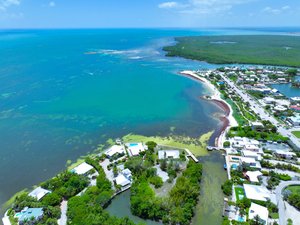
Before you worry about the kitchen, pull the permit record for the dock, boat lift, and seawall. Then line up a marine contractor, a structural or coastal engineer, and an insurance agent. Do it before your contract deadlines expire, because a structure that exists is not proof it was permitted or that it transfers to you.
What should you check before buying a waterfront home in Marathon?
Diligence starts with the dock, the seawall, and the permit record, because those are the parts of a Marathon waterfront purchase that a standard home inspection does not cover. Pull the parcel's permit history from Monroe County, hire a marine contractor and a structural or coastal engineer for the water side, confirm you can reach open water in your own boat, and get written flood and windstorm insurance indications before your contract deadlines expire.
Key Takeaways
Homes sold in Marathon over roughly the last 90 days (as of November 2026) had a median sale price of $950,000, so an unpermitted dock or a failing seawall is a material issue on a high-value purchase.
The City of Marathon states that the entire city is identified as a coastal floodplain, and standard homeowners insurance does not cover flood damage.
A new NFIP flood policy generally carries a 30-day waiting period, so request insurance quotes early in your contract instead of at the end.
A dock that exists is not proof it was permitted, matches approved plans, or transfers to you, so search the permit record by address or parcel ID and ask about any state submerged-land authorization.
"Waterfront" does not mean usable boating access, so test the route to open water at the tide your boat needs.
Why Diligence Starts With the Dock and the Permit Record in Marathon
The house is only part of what you're buying. The dock, boat lift, and seawall each carry their own permit history, their own structural risks, and sometimes their own state authorization, and any one of them can change your decision. That's why we tell every waterfront buyer that diligence starts with the dock, before the interior finishes and before the staging.
What should you pull first from the permit system?
Start with the parcel, not the listing description. Get the property address and parcel identification number, then search Monroe County's online permitting system, which lets you search active permits by address or parcel ID. Look for the house, dock, boat lift, seawall, electrical work, structural repairs, and prior alterations.
Then ask for the paper trail behind each one:
Permit numbers and approved plans
Inspection history and final approvals
Notices of violation
Any open permits
The City of Marathon maintains its own building and floodplain pages, so ask which office holds which record. The city's building FAQ says three sets of plans are required for new construction, development-agreement projects, and any in-water work. In-water work is not casual, and it shouldn't be treated casually in your review. The county's building and permitting department also coordinates planning, environmental, structural, plumbing, mechanical, electrical, floodplain, and fire review. A single dock or seawall project can touch several of them.
Is an existing dock or seawall automatically legal?
No. A structure being there tells you nothing about whether it was approved. Monroe County's completed permit records include entries for dock, boat-lift, and seawall work, from repairs and replacements to new seawalls and marginal docks. Those entries are the kind of record you want to match against what's physically on the property.
Florida's environmental permitting materials also separate authorization pathways for private docks, seawalls, bulkheads, and shoreline-stabilization structures. The DEP authorization materials under Rule 62-330.060, F.A.C. describe situations involving state-owned submerged lands and work waterward of a prior seawall location. Which authorization applies depends on the structure, the waterbody, the dimensions, and the proposed work. Do not assume an existing structure is grandfathered or transferable.
Does state-owned submerged land change the deal?
It can. The Florida Department of Environmental Protection handles submerged-land leases, easements, renewals, modifications, and assignments to new upland owners. If a dock or shoreline structure depends on one of those authorizations, ask for the recorded or agency-issued document, confirm its legal description, and ask whether an assignment or other action is needed when ownership changes.
This is a title-and-permitting question, not an inspection question. Your surveyor, title professional, and closing agent should see it early. Every property's answer is different, which is why a property-specific review beats any checklist you'll find online, including ours.
Who should inspect the dock, seawall, and water access before your deadlines?
You need more than one professional. A home inspector covers the house, but the water side calls for a marine contractor or marine surveyor, a structural or coastal engineer, and a surveyor or title professional for the shoreline lines. Waterfront is its own asset class, and we guide buyers with property-specific facts first, not generalities.
Specialist Home Inspector - What they review
The building and elevated components
Marine contractor or marine surveyor - Dock framing, piles, decking, cleats, ladders, electrical components, and boat-lift equipment
Structural or coastal engineer - Seawall settlement, cracking, rotation, undermining, tiebacks, and drainage.
Surveyor or title professional - Shoreline, riparian rights, easements, setbacks, and whether improvements extend over state-owned submerged landsInsurance agentProperty-specific flood, windstorm, homeowners, and dock-related underwriting information.
Can you reach open water from this canal at low tide?
You can't know from the listing. "Waterfront" and "ocean access" are marketing phrases, not a navigation survey. Document the canal width, bridge clearance, turning room, submerged obstructions, shoaling, tidal depth, and the route to open water. Then confirm your specific vessel can run that route at the tide you'd actually use it.
Take the boat trip, don't just drive by. Also find out whether any dredging, filling, seawall work, or channel maintenance would need its own authorization, because that changes what the property can become after you own it.
How do flood exposure and insurance change the purchase decision?
They can change it completely. The City of Marathon states that all of the city is identified as a coastal floodplain, with construction regulated under its floodplain-management ordinance. The city's flood-safety guidance is plain that standard homeowners insurance does not cover flooding, and that flood insurance is separate coverage through the National Flood Insurance Program, in which Marathon participates.
Timing matters too. That same guidance tells buyers to account for a 30-day waiting period before flood coverage takes effect, subject to federal exceptions. FEMA notes that homes in high-risk flood areas with mortgages from government-backed lenders are required to carry flood insurance. Ask your lender early what applies to your loan.
What flood and storm records should you request?
Ask the seller for these before your insurance and inspection deadlines run out:
Elevation certificates
Flood claims history, where available
Mitigation records and repair invoices
Engineering reports
Permits pulled after hurricanes
Any substantial-damage or substantial-improvement determination
Monroe County publishes guidance on the federal "50% rule" framework for substantial improvement and substantial damage. A property's actual determination should come from the applicable building or floodplain officials, not from listing language.
When you get insurance indications, look past the headline. Compare exclusions, deductibles, the elevation information used, prior claims, and whether the dock and other exterior improvements are covered at all.
What does the 2026 Marathon market mean for your deadlines?
It means you have room to do this properly. According to recent local market data, homes sold in Marathon over roughly the last 90 days (as of November 2026) had a median sale price of $950,000. The median time from listing to going under contract for those homes was 64 days. There were 256 homes for sale now, 44 new listings in the last 30 days, and 75 homes sold in that window.
With that much inventory, you don't need to waive diligence to compete. Those are area-level numbers, and an individual waterfront home's value depends on condition, street, build year, seawall and dock status, and timing.
Source: aggregated public listing data, trailing 90 days, as of November 2026.
Area | Median | Sale Price
Marathon $950,000
Key Colony Beach $1,035,000
Duck Key $850,000 (townhomes)
Islamorada $1,287,500
How should you sequence the work inside your contract?
Here is the order we walk our clients through, because diligence starts with the dock and builds outward from there:
Get the parcel ID and pull permit records for the house, dock, boat lift, and seawall.
Book the marine and structural inspections alongside the home inspection.
Run the boat route to open water at the tide you need.
Order the survey and title review, including any submerged-land authorization.
Request written flood and windstorm insurance indications, and confirm lender requirements.
When you negotiate, separate the findings into four buckets: safety defects, unpermitted work, insurability problems, and optional upgrades. Each one calls for a different request, and mixing them weakens all of them. If you're still comparing properties, our featured Duck Key property listings are a good place to see what's on the market. Then bring any address to us and we'll tell you which records and specialists that property needs.
If you've worked with us, we'd appreciate you reading our reviews on Google.
FAQ
How do I check whether a Marathon dock, boat lift, and seawall are permitted?
Search Monroe County's online permitting system by the property's address or parcel ID. Look for entries covering the dock, boat lift, seawall, and any related electrical or structural work, and ask for approved plans, inspection history, final approvals, and any open permits or violations. Also ask the City of Marathon building department which records it holds.
Does the dock permit or submerged-land authorization transfer when the property is sold?
Don't assume it does. The Florida Department of Environmental Protection handles assignments of submerged-land authorizations to new upland owners, so ask whether one is needed for your property. Request the recorded or agency-issued document and have your title professional confirm its legal description.
Who should inspect a seawall and dock before my contract inspection deadline?
A marine contractor or marine surveyor should inspect the dock and boat lift, and a structural or coastal engineer should evaluate the seawall. Your regular home inspector covers the house itself. Book all of them at the start of your inspection period, since specialists' schedules are what usually run into the deadline.
Will my lender require flood insurance on a Marathon waterfront home?
Possibly, and you should confirm it with your lender early. FEMA states that homes in high-risk flood areas with mortgages from government-backed lenders are required to carry flood insurance. The City of Marathon also advises accounting for a 30-day waiting period before a new NFIP policy takes effect.
Can I actually reach open water from this canal at low tide?
You can only know by checking the route. Document canal width, bridge clearance, turning room, obstructions, shoaling, and tidal depth, then run your intended boat through it at the relevant tide. A listing that says "waterfront" doesn't establish that.
The bottom line
A Marathon waterfront purchase can pass the house inspection and still fail on permits, seawall condition, water access, or flood insurance. That's why diligence starts with the dock, and why we build the review around the specific parcel. If you're weighing a waterfront property in the Middle Keys, schedule a consultation with our team at 305-783-3395 and we'll map out the records and specialists before your deadlines start running.
About The Brenner Scheel and Casey Team
Kristen Brenner, with Tierce Scheel and Margie Casey, leads The Brenner Scheel and Casey Team, the #1 selling team on Duck Key and Certified Luxury Home Marketing Specialists with over $700 million in closed sales across the Florida Keys. Their focus is waterfront estates, luxury residences, and high-performing vacation properties from Key Largo to Key West, backed by Duck Key Realty, founded by the Brenner family in 1977 and based in the Middle Keys along the Overseas Highway.
Duck Key Realty | Florida Keys Real Estate Group · 305-783-3395
Equal Housing Opportunity. Kristen Brenner, Broker / Owner, Duck Key Realty | Florida Keys Real Estate Group. This article is general information, not legal, tax, or financial advice. Confirm your own numbers and requirements with your closing agent, tax advisor, or lender.